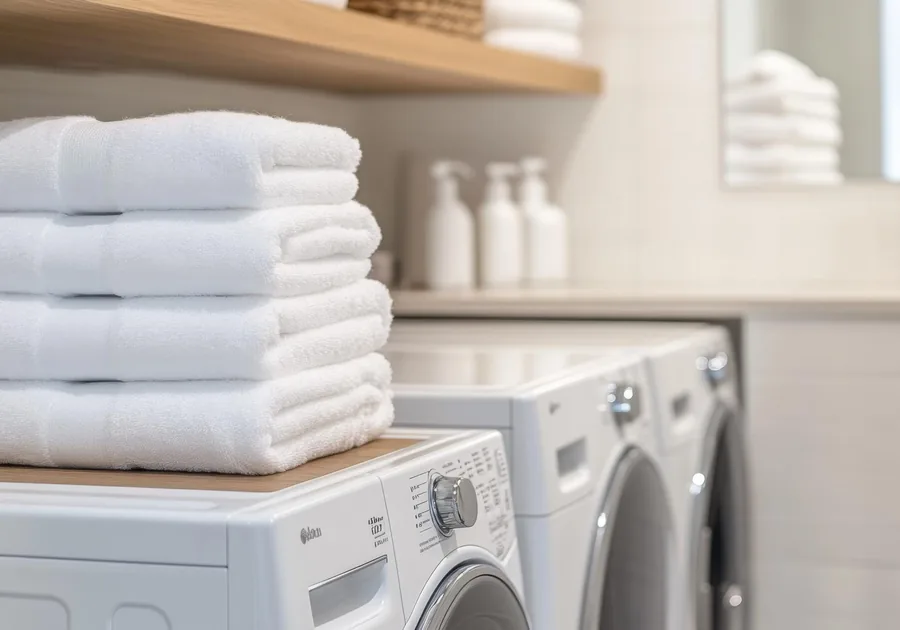
A washer and dryer stacked in a hallway closet is a great use of space, and it is also a tighter, hotter, harder-working setup than a full laundry room. A few checks before you pick up the phone can save you a service call, and the ones that do not, we are glad to help with.
Start with the vent, always
A dryer that takes two or three cycles to dry a load is, almost always, a venting problem before it is a machine problem. A closet installation vents through a long run with several bends to reach an exterior wall, and every bend and every foot of duct cuts into the airflow the dryer depends on. Lint builds up fastest right at those bends.
- Clean the lint trap after every load, not once a week.
- Check that the outside vent hood flaps open freely when the dryer runs. A hood clogged with lint is a common culprit.
- If nobody has cleaned the duct itself in a year or more, that is worth doing before you call about a dryer that is “not heating right.” A duct that is mostly blocked can look exactly like a bad heating element from the front of the machine.
Check the obvious with the washer first
A washer that will not start: make sure the closet door is fully latched if yours has a safety switch, check the outlet has power (a tripped GFCI outlet is a very common, very quick fix), and make sure nothing is jamming the door lock.
A washer that walks or bangs during spin is nearly always the load, not the machine. A stacked unit has less mass to absorb an unbalanced load than a standalone washer, so it shows up faster. Redistribute the load and try again before assuming it is mechanical.
What a technician checks that you cannot
Getting a stacked pair apart to service properly takes more than unplugging it. It means releasing the stacking kit, walking two heavy machines out of a closet without marking the hallway, and refitting the anti-tip bracket correctly on the way back in, which we find missing more often than we would like. That part is ours to handle.
One thing worth doing every few years
Replace rubber supply hoses with braided stainless on a schedule, whatever they look like. A hose that lets go in a closet with no floor drain sends water into the apartment below before anyone notices upstairs. That is the single costliest laundry failure we see in Queens apartment buildings, and it is also the easiest one to prevent.
If you have checked the vent, the outlet and the load and it is still not right, call (718) 000-0000. Our technicians are certified, insured and background-checked, and used to working in tight closets on a building’s service elevator schedule.